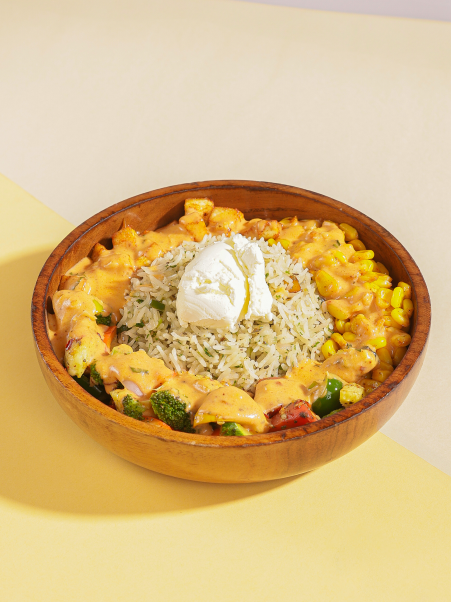
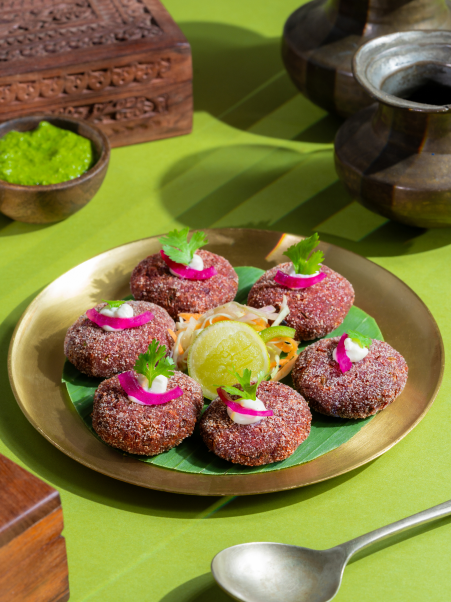
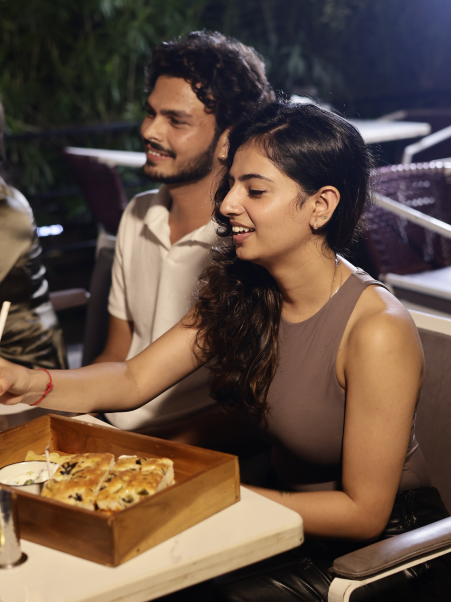
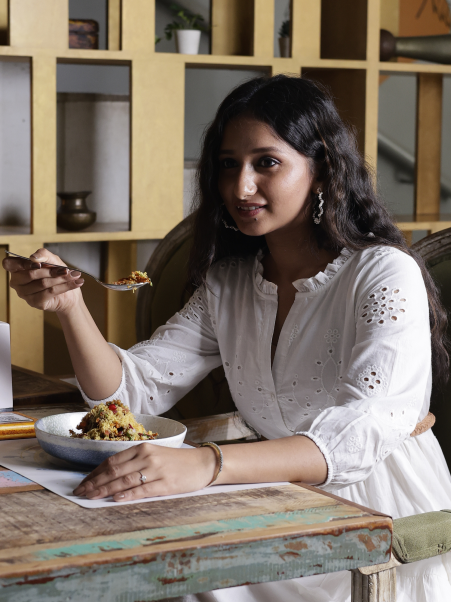
Below are a few of the Shravan special dishes you should try:
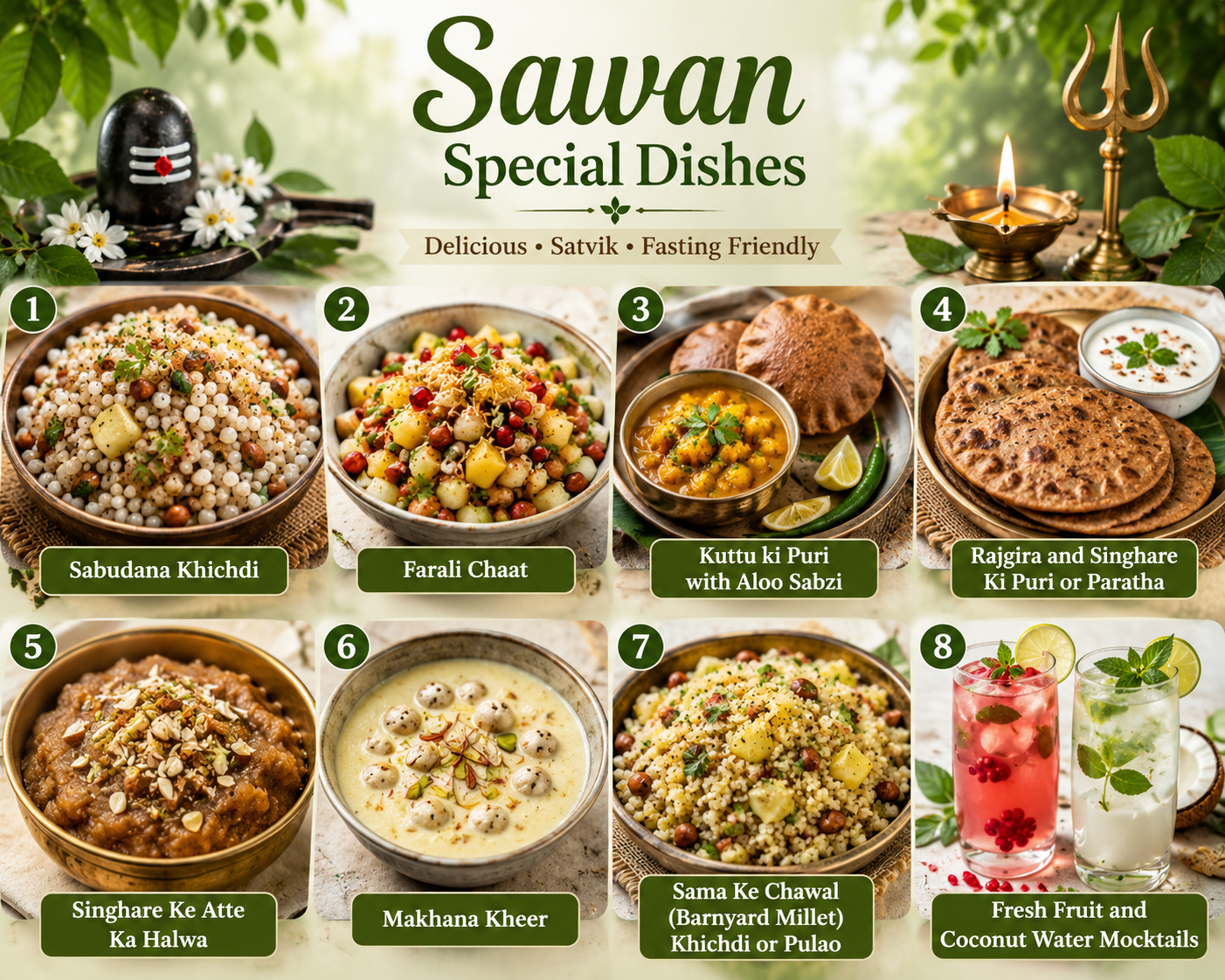
1. Sabudana Khichdi
The undisputed star of Shravan food. Soaked sago pearls are tossed with roasted peanuts, cumin, green chilies, curry leaves, and a squeeze of lime, making a comforting, filling, and completely sattvik dish. The trick to a good khichdi lies in the soaking; the pearls need to be tender enough to separate cleanly without turning gluey.
Versions in the city nail this balance, delivering a satisfying bite in every spoonful. It's a great starting point if you're new to fasting food, and filling enough to work as a full meal on its own.
2. Farali Chaat
Ahmedabad's chaat culture doesn't pause for Sawan; it simply adapts. Farali chaat swaps out regular puris and sev for kuttu- or singhare-based crisps, topped with curd, mint chutney, tamarind, and pomegranate for that signature tangy-sweet punch.
It proves that fasting food doesn't have to be boring; the same layering of textures and flavors that makes regular chaat so addictive shows up here too, just on a different base. Street-style farali chaat carts pop up around temple areas during Shravan, but restaurant versions tend to be more consistent and easier on the stomach.
3. Kuttu ki Puri with Aloo Sabzi
Buckwheat flour puris paired with a lightly spiced potato curry are a Shravan Monday staple across Gujarati households and restaurants serving vrat-specific dishes. The puris puff up beautifully when fried at the right temperature. At the same time, the potato curry, usually seasoned with cumin, ginger, and green chili rather than a heavy masala base, keeps things light without skimping on satisfaction. Kuttu ki puri and aloo sabzi are crispy, hearty, and deeply comforting. This combination is often the centerpiece of a Shravan Monday thali.
4. Rajgira and Singhare Ki Puri or Paratha
Alongside kuttu, amaranth (rajgira) and water chestnut (singhara) flours go into soft parathas or crisp puris, usually served with simple curd or a peanut-based curry. These flours carry a slightly nutty, earthy flavor that sets them apart from regular wheat, and they pair beautifully with a dollop of fresh curd and a side of roasted peanut chutney.
5. Singhare Ke Atte Ka Halwa
Water chestnut flour halwa is the showstopper! Slow-cooked in ghee with cardamom, saffron, and dry fruits, it is the dessert every fasting devotee looks forward to. Warm, rich, and indulgent despite being vrat-friendly, it turns a fasting day into something to look forward to. Some versions add a touch of khoya for extra richness, while lighter versions lean more on the flour's natural sweetness.
6. Makhana Kheer
Roasted foxnuts simmered in sweetened milk with saffron, cardamom, and chopped nuts make for a lighter, more elegant alternative to heavier festive desserts, perfect for a Shravan evening after temple visits. The foxnuts stay slightly crunchy even after simmering, giving the kheer a pleasant textural contrast that keeps every spoonful interesting.
7. Sama Ke Chawal (Barnyard Millet) Khichdi or Pulao
Less common outside dedicated vrat menus, sama ke chawal is a fasting-friendly millet that cooks up light and fluffy, much like rice but easier on digestion. Tossed with peanuts, cumin, and a touch of ghee, it's an excellent change of pace from sabudana during a longer fasting stretch.
8. Fresh Fruit and Coconut Water Mocktails
With the monsoon humidity, hydration matters just as much as what's on the plate. Fruit-forward, sendha namak-spiked mocktails, buttermilk (chaas), and coconut-based drinks are refreshing ways to round out a Sawan meal without breaking any fasting rules. A well-made jaljeera or coconut mocktail, in particular, hits the same cooling, craveable note as any regular monsoon evening drink.